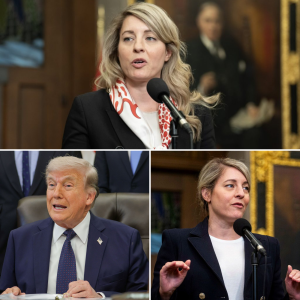
The news conference had been called to discuss infrastructure funding. But within minutes, the room in the Manitoba Legislative Building became the stage for one of the most dramatic exchanges between provincial premiers in recent memory.
At issue was a question that has haunted Canadian federalism for decades: Does Alberta need to consult Indigenous communities before moving forward with separation-related initiatives?
Danielle Smith, the Premier of Alberta, had suggested earlier in the week that the legal duty to consult might not apply to “exploratory conversations” about sovereignty and potential independence. Her comments, made during a radio interview in Calgary, had drawn sharp criticism from First Nations leaders across the prairies.
But it was Wab Kinew, the Premier of Manitoba and the first First Nations premier in Canadian history, who delivered the most forceful rebuttal.
Standing before a bank of microphones, Kinew addressed Smith’s comments directly. “That is not correct,” he said, his voice calm but carrying an unmistakable edge.
The room fell silent. Kinew, who rarely engages in confrontational politics, continued with measured precision. “The legal duty to consult is the responsibility of the Alberta government — not citizens collecting petition signatures. That is settled law. It is not negotiable.”
The exchange did not end there. Kinew, demonstrating a strategic dexterity that has made him one of the most watched political figures in Canada, pivoted from confrontation to an unexpected proposal.
“Why don’t we hold off on this referendum talk for a year or two, so we can get these pipelines under construction?” Kinew asked, directing his gaze toward the cameras as if speaking directly to Smith across the provincial border.
“Because at the end of the day, we want Canada to succeed.”
The room erupted in murmurs. Reporters exchanged glances. The offer — defer separation referendums in exchange for accelerated pipeline construction — was a political gambit of rare sophistication.
Smith, who was not present in Winnipeg, reportedly declined to respond when asked about Kinew’s comments later that day. Her office issued a brief statement reiterating that “Albertans have the right to discuss their future” but offering no direct rebuttal to Kinew’s legal or political points.
The clash has laid bare a deepening fracture in Canadian federalism. Alberta’s sovereignty movement, once dismissed as a fringe hobby of rural conservatives, has gained mainstream momentum under Smith’s leadership.
The catalyst was the federal government’s emissions cap on oil and gas production, announced in late 2025, which Alberta argues would cripple its economy while offering negligible environmental benefits. The cap, scheduled to take effect in 2027, would require a 35% reduction in upstream oil and gas emissions from 2019 levels by 2030.
For Smith and her United Conservative Party government, the cap was the final straw in a long list of perceived federal overreach: the carbon tax, tanker bans on British Columbia’s north coast, Bill C-69 (the “No More Pipelines Act,” as Alberta calls it), and what the province views as Ottawa’s chronic underfunding of resource development.
The sovereignty movement’s primary vehicle is the “Alberta Advantage” proposal, which would authorize a series of referendums on potentially separating key provincial institutions from federal control. The most ambitious scenario — outright secession — remains unlikely, but even incremental steps toward greater autonomy alarm federalists.
Smith has insisted that her government’s approach is “negotiation, not separation.” But her comments this week about Indigenous consultation suggested a willingness to test legal boundaries that most constitutional experts consider inviolable.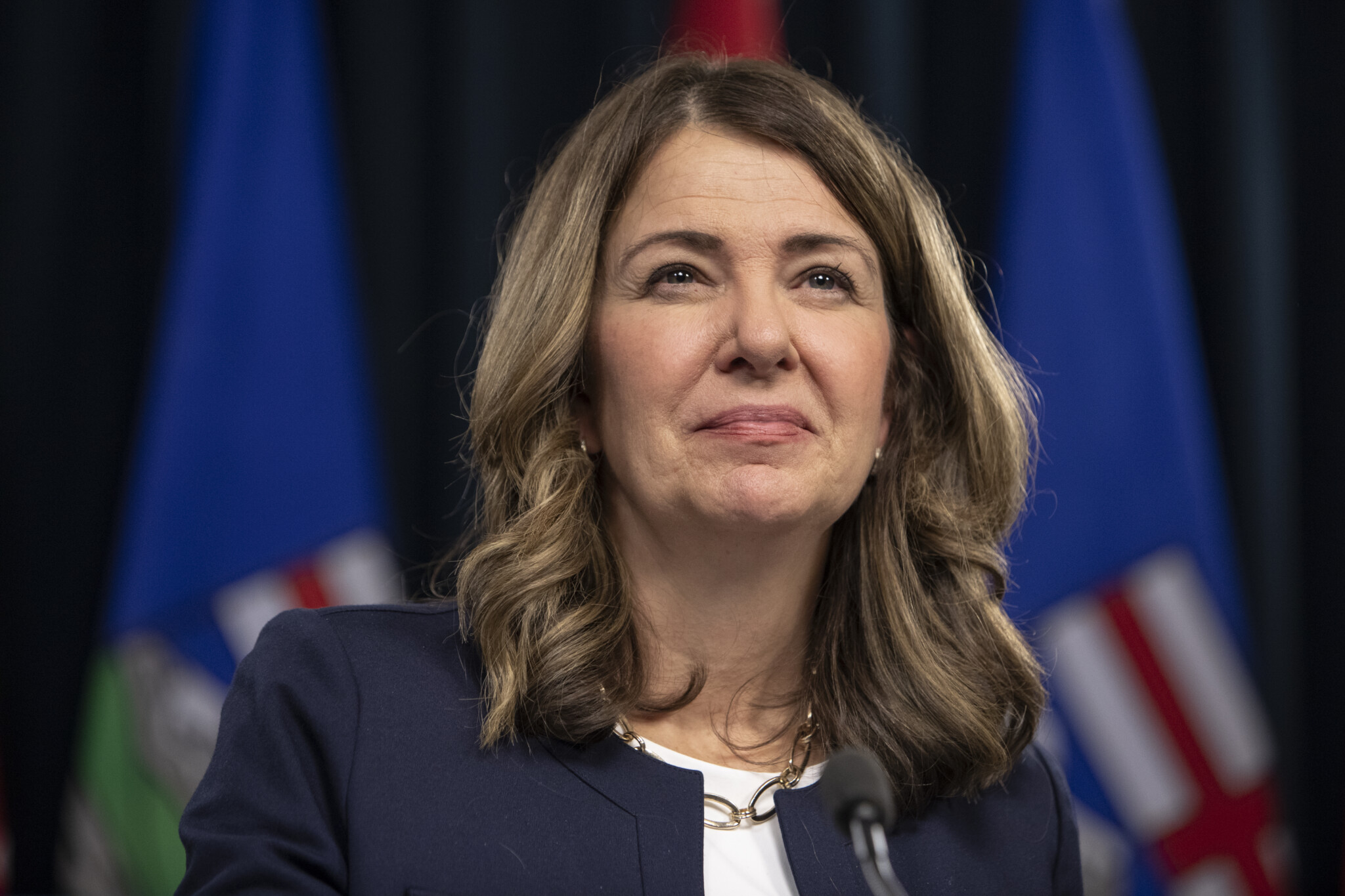
The duty to consult Indigenous peoples is enshrined in Section 35 of the Constitution Act, 1982, and has been affirmed by the Supreme Court of Canada in dozens of rulings. Any major provincial initiative affecting Aboriginal or treaty rights — including a referendum on separation — would almost certainly trigger that duty.
Kinew’s intervention was notable not only for its substance but for its source. As the first First Nations premier of a Canadian province, he carries a moral authority on Indigenous issues that few of his peers can match.
“The duty to consult is not a political inconvenience,” Kinew said later in an interview with this newspaper. “It is a constitutional obligation. And it is not optional. If Alberta wants to have a conversation about its future, that conversation must include First Nations.”
Kinew’s proposal to delay referendum talk in exchange for pipeline construction was strategic. It simultaneously acknowledged Alberta’s economic frustrations while rejecting its constitutional arguments.
By offering a path to pipelines — a long-standing Alberta demand — Kinew tested whether Smith’s separation rhetoric is a negotiating tactic or a genuine ideological commitment. If Smith accepts, the sovereignty movement loses momentum. If she refuses, it suggests the movement is about more than pipelines.
Smith’s silence, for now, speaks volumes.
The reaction from Ottawa was measured but pointed. Prime Minister Mark Carney, speaking to reporters in Ottawa, declined to comment directly on the Smith-Kinew exchange but reiterated his government’s commitment to “working with all provinces within the framework of the Constitution.”
“The duty to consult is not optional,” Carney added, echoing Kinew’s language. “It is the law. And this government expects all provinces to follow the law.”
The Conservative opposition, led by Pierre Poilievre, has walked a careful line on the issue. Poilievre has expressed sympathy for Alberta’s frustrations but has stopped short of endorsing separation or even sovereignty referendums.
“Canada is stronger with Alberta,” Poilievre said during a town hall in Edmonton last week. “And Alberta is stronger with Canada. But Ottawa needs to start listening to Western Canada, or the consequences will be severe.”
That ambiguity has frustrated both wings of the conservative movement. Pro-sovereignty activists see Poilievre as insufficiently committed to Alberta’s cause. Federalists see him as fueling separatist sentiment for political gain.
Indigenous leaders, meanwhile, have watched the rising sovereignty debate with alarm. Assembly of First Nations National Chief Cindy Woodhouse Nepinak issued a statement this week reminding all premiers that “no constitutional changes affecting Indigenous rights can occur without Indigenous consent.”
“The duty to consult is not a suggestion,” Woodhouse Nepinak said. “It is a legal requirement. Any discussion of Alberta’s future that excludes First Nations is not only disrespectful — it is unconstitutional.”

The debate over Alberta sovereignty is not new, but the intensity has escalated. A poll conducted by Leger earlier this month found that 38% of Albertans support “exploring the possibility of separation” — the highest level in two decades.
Support is highest among self-identified conservatives (62%) and those under 35 (44%), suggesting the movement has generational legs. But support for outright secession remains much lower, at around 18%.
The Smith government has not announced a timeline for any sovereignty referendum. But the premier has promised legislation that would authorize “Albertan votes” on specific federal policies deemed harmful to provincial interests.
Whether those votes would trigger the duty to consult Indigenous communities is the legal question now hanging over the entire enterprise. Kinew’s intervention has forced that question into the open.
As Kinew concluded his remarks in Winnipeg, he returned to the theme that has defined his premiership: pragmatism over symbolism.
“I understand that Albertans are frustrated,” he said. “Manitobans have been frustrated too. But the answer to frustration is not walking away. The answer is building. Let’s build pipelines. Let’s build prosperity. Let’s build a Canada that works for everyone.”
The cameras cut away. The news conference moved on to infrastructure funding. But the exchange between two premiers — one from the province that feels left behind, one from the province that refuses to let it go alone — will echo through Canadian politics for years to come.
Smith did not respond. But the question now hangs over the prairies: Is Alberta pushing too far, too fast? Or is Ottawa ignoring the growing frustration in the West?
Perhaps the answer is both. And perhaps that is why Kinew’s quiet offer — “hold off for a year or two” — may be the most important political proposal no one has yet accepted.