The Daunting Barriers Standing in the Way of Canada Joining the EU 💥
Canada has long been regarded as the most European of nations outside Europe itself. Its democratic traditions, social values, and cultural affinities have positioned it as a natural partner for the European Union. Yet turning that affinity into full membership remains a distant and extraordinarily difficult prospect.
The idea of Canada joining the EU has gained surprising traction in recent years. Some European leaders have floated the notion publicly. Public opinion polls in both Europe and Canada show notable support. But formidable legal, economic, and political obstacles make the path forward nearly impossible under current rules.
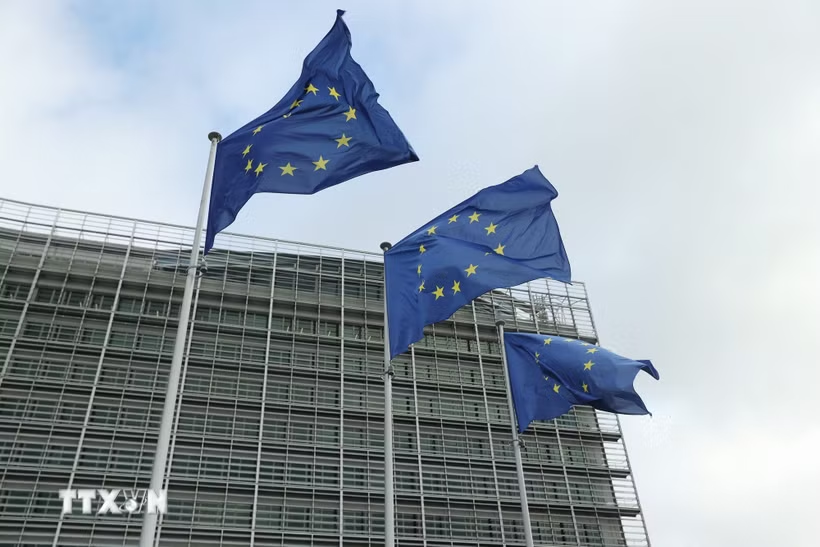
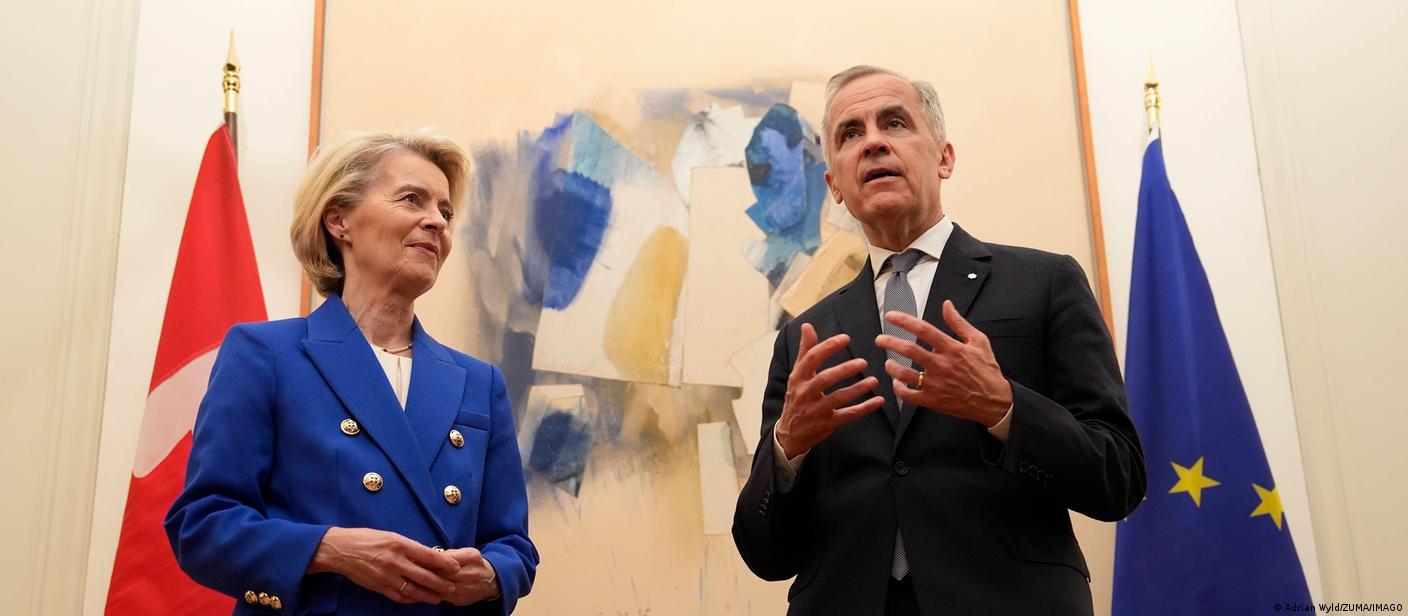
Canada earned a symbolic milestone when it became the first non-European country invited to the European Political Community summit in Yerevan, Armenia. The gathering underscored deepening ties amid global instability. Prime Minister Carney has repeatedly emphasized shared values with European allies, particularly in defense, energy, and technology.
Still, at the NATO summit in the Netherlands in June 2025, Carney made Canada’s position clear. Ottawa seeks a stronger partnership with the EU, not formal membership. The distinction matters greatly in diplomatic circles.
Public sentiment reveals a more optimistic picture. A recent survey found 55 percent support in Germany, 51 percent in Spain, 46 percent in Poland, 42 percent in France, and 41 percent in Italy for welcoming Canada into the EU. In Canada itself, 57 percent of respondents backed the idea.
These numbers reflect genuine goodwill. Many Europeans view Canada as a stable, like-minded democracy that could bolster the bloc’s geopolitical weight. Canadian citizens, meanwhile, see EU membership as a way to diversify alliances in an increasingly fractured world.
Prominent European figures have encouraged the conversation. French Foreign Minister Jean-Noël Barrot has referenced the possibility for the future. Finnish President Alexander Stubb has also spoken positively about the concept. Such comments keep the discussion alive despite official caution.
Yet experts caution that enthusiasm alone cannot overcome structural realities. The most immediate barrier is legal. Article 49 of the Treaty on European Union explicitly limits membership to “European states.” Canada’s geography places it firmly outside that definition, both literally and in the political sense the treaty implies.
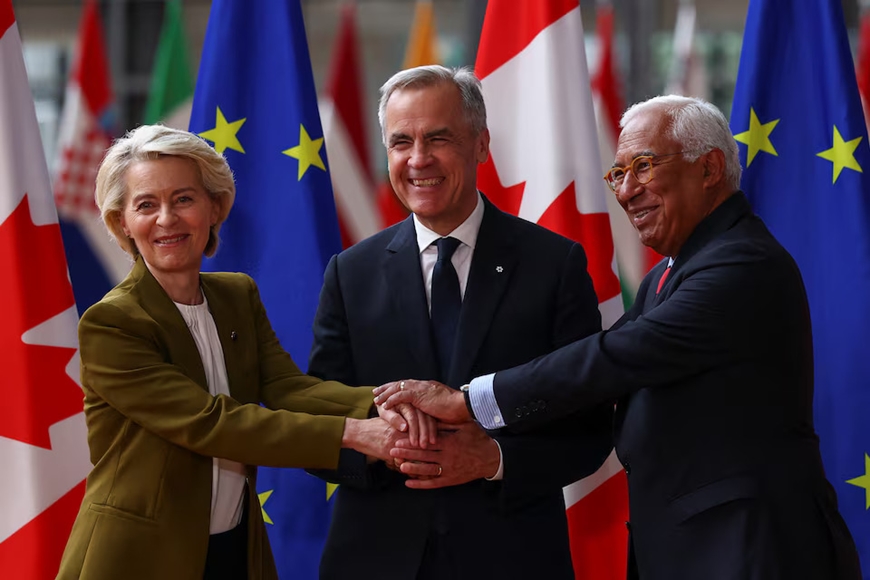
EU officials and legal scholars have consistently interpreted this clause strictly. No serious precedent exists for admitting a transatlantic nation, no matter how culturally aligned. Changing the treaty would require unanimous approval from all member states—an extraordinarily high bar.
Economic considerations add another layer of complexity. Canada ranks among the world’s wealthiest nations, with GDP per capita well above the EU average. As a member, it would likely become one of the largest net contributors to the bloc’s budget.
Estimates suggest Canada could face annual contributions ranging from $6.5 billion to $20 billion. Such sums would represent a significant new fiscal commitment at a time when many Canadians are focused on domestic priorities and North American trade relations.
Regulatory alignment poses perhaps the greatest practical challenge. EU membership demands adoption of thousands of rules covering everything from agriculture and fisheries to environmental standards, labor laws, and digital governance. For Canada, this would require sweeping adjustments to its economic model.
Mark Camilleri, special advisor to the EU at the Canada Business Council, has warned of the consequences. “The regulatory recalibration necessary for Canada to join the EU would certainly create instability for the North American market economy and beyond,” he noted.
Canada’s deep integration with the United States through the USMCA trade agreement complicates matters further. Harmonizing with EU standards could create friction along the world’s longest undefended border and disrupt established supply chains.
Political dynamics within Europe present additional hurdles. Several member states remain wary of expanding the bloc’s membership after the prolonged difficulties of previous enlargements. Others prioritize addressing internal challenges such as migration, energy security, and democratic backsliding.
Enlargement fatigue is real. The accession process for Western Balkan nations and potential candidates like Ukraine has already proven lengthy and contentious. Adding a non-European country would set a precedent that many capitals are unprepared to contemplate.
Despite these obstacles, proponents argue that creative solutions could emerge. Some suggest forms of enhanced association short of full membership. Others envision gradual convergence in specific policy areas without treaty changes.
Prime Minister Carney’s government appears focused on pragmatic cooperation. Recent initiatives have strengthened collaboration on defense procurement, clean energy transitions, and critical minerals. These steps deliver tangible benefits without the political risks of accession talks.
The broader global context adds urgency to the debate. Russia’s war in Ukraine, rising tensions with China, and uncertainty about future U.S. leadership have prompted both Canada and Europe to seek reliable partners. Canada’s resources, technology sector, and Arctic expertise make it an attractive ally.
Yet geography remains destiny in international institutions built around regional identity. The EU was founded as a European project. Expanding its geographic scope would require redefining its fundamental character—a step few leaders seem ready to take.
Public support, while noteworthy, remains far from consensus levels. Majorities in key countries like France and Italy are still below 50 percent. Sustained diplomatic momentum would require much broader enthusiasm across the continent.
For now, Canada and the EU seem destined for close partnership rather than political union. The relationship will likely deepen through trade deals, security cooperation, and people-to-people ties. But full membership appears blocked by legal texts, economic realities, and political caution.
The conversation itself holds value. It reflects Canada’s evolving role on the world stage and Europe’s search for partners in turbulent times. Whether that dialogue eventually leads to innovative new arrangements remains one of the more intriguing questions in transatlantic relations.