When Lumber Becomes Leverage: How Canada Quietly Tightened the Screws on America’s Housing Market
For decades, the U.S.–Canada softwood lumber dispute followed a familiar script. Washington accused Ottawa of unfair subsidies. Ottawa denied it. Tariffs were imposed, challenged, renegotiated, and imposed again. The arguments played out in trade tribunals, diplomatic back rooms, and occasional headlines—important, but largely invisible to most Americans.
That era may be ending.
Today, the average Canadian lumber mill exporting to the United States faces a combined tariff burden exceeding 45 percent. Yet Canada has not responded with counter-tariffs, legal escalation, or public threats. Instead, Ottawa and Canadian producers have adopted a subtler and far more consequential strategy: raising export prices on lumber sold into the U.S. market.
It is a move that sits just inside the rules of global trade—and just outside Washington’s ability to stop it.
The result is already being felt where Americans are most vulnerable: the housing market.
A Quiet Shift With Loud Consequences
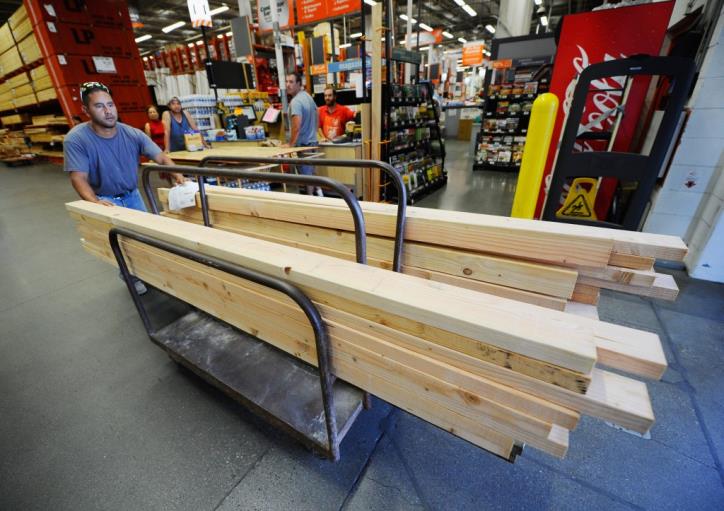
Canada supplies a substantial share of the softwood lumber used in American residential construction, including single-family homes, apartment buildings, modular housing, and post-disaster rebuilding. In many U.S. regions, particularly the Northeast, Midwest, and Pacific Northwest, Canadian lumber is not easily replaceable in the short term.
When prices rise at the source, the effects cascade. Builders face higher material costs. Developers recalculate project viability. Lenders reassess risk. And renters and homebuyers eventually pay the difference.
Industry analysts, construction executives, and housing economists—many of them vocal on social media platforms like X and LinkedIn—have been warning for months that price volatility, not outright scarcity, is now the biggest threat to new housing supply. Projects are not being canceled because lumber cannot be sourced, but because it cannot be priced with confidence.
Even modest increases in lumber costs can add thousands of dollars to the final price of a home once labor, financing, permitting, and margins are factored in. For projects already strained by high interest rates and labor shortages, that difference is often enough to delay or shelve construction altogether.
Why Washington Has No Easy Response
In a conventional trade dispute, the United States would respond with counter-tariffs, quotas, or a formal challenge through the World Trade Organization. None of those tools fit this moment.
Canada has not announced a new tariff. It has not restricted supply. It has not violated an explicit trade rule. What it has done is allow—or encourage—export pricing to reflect the cumulative burden imposed by U.S. duties.
That distinction matters.
Tariffs are visible and contestable. Pricing decisions by exporters are not. Under WTO frameworks, there is no tariff line to mirror, no quota to dispute, and no clear violation to litigate. The adjustment operates through the market itself, landing economic pain inside the United States while remaining legally opaque.
As trade lawyers and policy analysts have noted online and in policy briefings, this approach exploits a structural weakness in the global trade system: it is designed to regulate government actions, not strategic market behavior by allied exporters responding to sustained pressure.
Housing, Politics, and a Divided America
The political implications are severe.
Housing affordability consistently ranks among the top economic concerns for American voters, according to polling cited frequently by major U.S. outlets. Rising construction costs translate into higher rents and fewer new units—especially in fast-growing metropolitan areas where supply constraints are already acute.
State-level reactions are sharply divided. States that rely heavily on Canadian lumber imports want relief. States with domestic timber industries see opportunity in higher import prices, but lack the capacity to scale production quickly enough to fill the gap.
That internal split limits Washington’s room to maneuver. Any federal response risks alienating one bloc of states while failing to deliver immediate relief to another. Doing nothing, however, leaves policymakers exposed to voter anger as housing costs climb and construction employment softens.
Financial markets are watching closely. Lenders underwriting residential and commercial developments are tightening assumptions. Marginal projects are being shelved. Construction, one of the most labor-intensive sectors of the economy, is highly sensitive to such pauses.
When construction slows, the effects ripple outward—to subcontractors, transport firms, materials suppliers, and local economies that depend on steady building activity.
A Strategic Reframing of Resources
What makes this moment historically significant is not the price increase itself, but what it represents.
Canada is signaling a shift away from treating lumber as a commodity sold primarily on volume and toward treating it as a strategic asset priced for value and sovereignty. This approach mirrors conversations already underway in energy, critical minerals, and agriculture—sectors where control over inputs is becoming more powerful than control over finished markets.
The strategy carries risks. Higher prices can encourage substitution, spur investment in competing sources, and erode long-term market share. Canada appears to be betting that its resources remain critical enough, and alternatives slow enough to scale, that demand will hold—at least in the medium term.
If that bet succeeds, other countries will take notice.
Energy exporters, critical mineral suppliers, and agricultural producers who occupy similar positions in U.S. supply chains may conclude that quiet repricing is more effective than loud retaliation. The traditional trade war playbook—tariffs, counter-tariffs, public confrontation—could give way to a quieter, more persistent form of economic statecraft.
A New Economic Reality
For decades, deep economic integration between the United States and its allies delivered efficiency, lower prices, and resilience. It also created dependencies that are difficult to unwind quickly.
Expanding domestic lumber production in the United States would take years of investment, regulatory approval, workforce development, and environmental review. These are not levers that can be pulled on an election timeline.
The question facing American policymakers is no longer whether Canada’s move was justified or provocative. It is whether the United States is prepared for a world in which such moves become common—where allies assert economic interests without warning, and where strategic inputs are repriced without negotiation.
The housing market is feeling the effects first. But lumber is only the opening chapter.
What happens when the same logic is applied to energy, minerals, or food? What happens when access, not tariffs, becomes the primary tool of leverage?
The old assumptions of economic power are shifting—quietly, deliberately, and faster than most people realize.
And for the first time in a long time, America is discovering that its closest ally may also be its most sophisticated economic competitor.